By Nikki & Snatcher | Wherever We Land
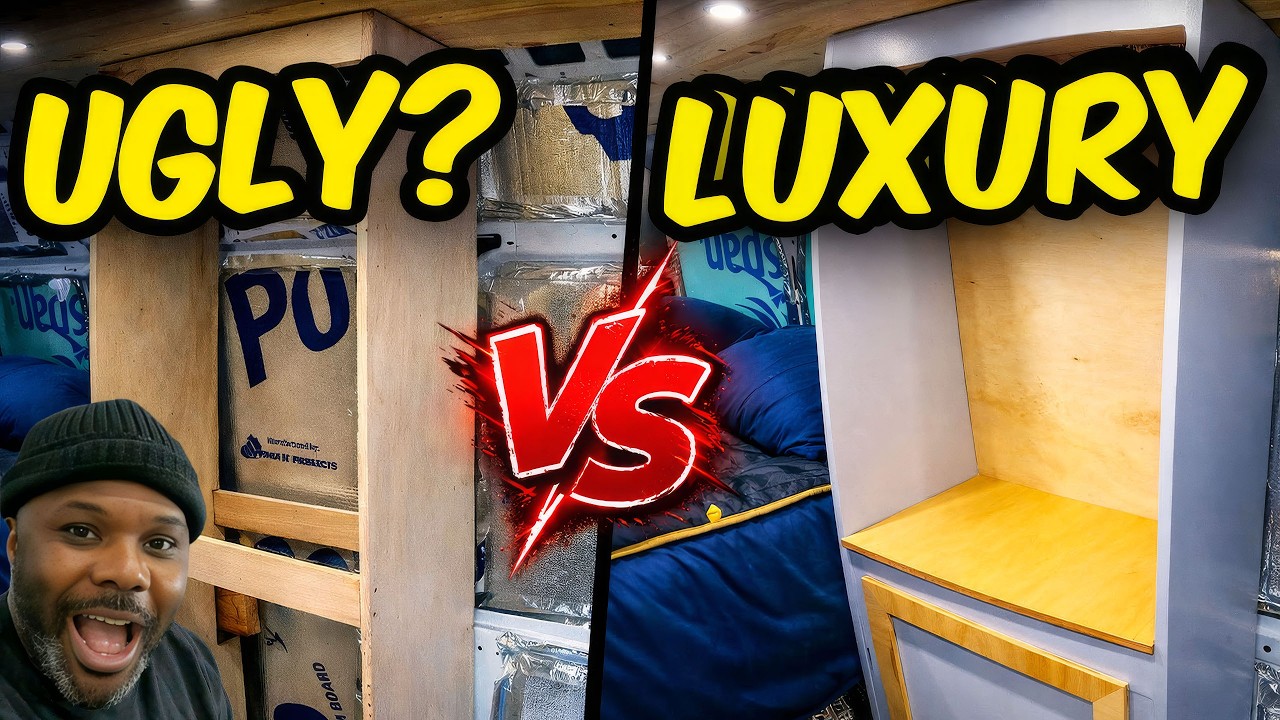
What’s up, Outside Gang! Peace and blessings to you. If you’ve been following our journey, you know that building “Glow” (our home on wheels) has been a labor of love, sweat, and a whole lot of prayer. Today, we are finally taking that raw, unfinished wood closet and turning it into something that looks pure luxury.
We’ve had weeks of staring at curved walls and awkward angles, but the finish line is here. In this guide, we’re breaking down every tip, trick, and even the “fails” from our latest build video. Whether you’re a seasoned van lifer or a weekend DIY warrior, this is how you get that professional, high-end finish on a budget.
🚀 Watch the Full Reveal Before You Build!
To see exactly how we handled these tricky curves and the “Iron-On” magic, check out the full video below:
1. The Secret to “Luxury” Edges: Real Wood Veneer Edging
One of the biggest giveaways of a “DIY” project is seeing the raw, layered edges of plywood. Snatcher swears by this one trick to make your cabinets look like solid hardwood: Pre-glued Real Wood Veneer Edging [00:02:43].
Snatcher’s Pro-Tips for Edging:
- Use a Heat Source: Snatcher “borrowed” Nikki’s iron for this! The heat melts the adhesive on the back of the veneer, bonding it permanently to the wood edge [00:03:31].
- Trim with Precision: You need a sharp razor blade. Dull blades will splinter the veneer and ruin that flush look [00:05:12].
- Apply Pressure: After ironing, run a block of wood over the strip to ensure it’s flat and the glue is evenly distributed.
2. How to Properly Prep for Paint (Don’t Skip This!)
You can buy the most expensive paint in the world, but if your prep work is messy, the closet will look cheap. We used a two-step process to ensure a smooth, professional finish.
Step A: Wood Filler vs. Wood Putty [00:12:31]
Snatcher learned this on the fly—always fill your screw holes! Using wood filler (it’s like drywall mud for wood) hides the fasteners and makes the unit look like one cohesive piece.
Pro Tip: Put the filler in, smooth it out, let it dry, and then lightly sand it until flush [00:13:10]. It makes a massive difference once the paint hits the surface.
Step B: The “Double Coat” Method [00:17:18]
Never settle for one coat of paint.
- First Coat: Acts as a primer and shows you any imperfections.
- Second Coat: Provides that deep, rich color and durability needed for van life.
3. Hardware & The “Trial and Error” Lesson
In van life, your closet doors can’t just look good—they have to stay shut while you’re driving 70mph! Snatcher attempted to install LenKrad pop-button latches [00:01:56].
The “Real Talk” Moment: Even the pros hit roadblocks. Snatcher spent over an hour trying to make the step-drill bit work for these latches, only to realize it wasn’t the right tool for this specific framing [00:10:00].
“Don’t be afraid to fail. You win some, you lose some. Live to fight another day.” – Snatcher [00:12:56].
4. Nikki’s Design Choice: To Paint or Not to Paint? [00:21:01]
This is where the “Luxury” really comes in. We had a debate at Lowe’s: Should the shelves be blue or natural wood?
Nikki won this one, and Snatcher admits she was 100% right! By leaving the top shelf and the back panel in a natural wood finish, it matches our galley countertop and breaks up the blue [00:21:07]. This “contrast” look is what separates a basic van build from a professional interior design.
The Final Color Palette:
- The Base: Deep Navy Blue (Matches our galley and love seats).
- The Accents: Natural Birch/Wood (Matches the countertops).
5. Detailed Step-by-Step Summary for Your Build
- Dry Fit: Ensure the closet fits the curves of your van [00:00:52].
- Veneer Edging: Apply with heat to all exposed plywood edges.
- Wood Filler: Fill every single screw hole and sand smooth.
- Paint: Apply two even coats, removing doors for easier access [00:13:34].
- Hardware: Plan your latches carefully to avoid drilling unnecessary holes.
- Backing: Use scrap wood to secure your back panel—it adds stability without adding weight! [00:19:32].
Final Thoughts from Nikki & Snatcher
This build was a journey. From “awkward wood” to a “Luxury Armoire,” we are so thankful for the progress on Glow. It’s coming together marvelously, and we couldn’t do it without the support of the Outside Gang.
Want to see the Galley build Snatcher mentioned? Watch it here!
Drop a comment below: Should we have painted the shelves, or do you love the natural wood look? Let us know!
To God be the glory. Remember, He guides us wherever we land! 🤟🏾
Frequently Asked Questions (FAQ)
Q: What paint did you use?
A: We used a high-quality interior paint that works on all wood surfaces. Ensure you stir it well before applying! [00:14:11]
Q: How do you prevent wood from splintering when sawing?
A: Snatcher is looking for your tips on this! Drop them in the YouTube comments to help a brother out [00:18:55]!
Q: Where can I buy the latches?
A: We used LenKrad pop-button latches, which are great for keeping doors secure on the road.
DIY Van Build, Van Life, Custom Cabinetry, Plywood Edging, Wood Veneer, Sprinter Van Conversion, Interior Design, Painting Tips

 Wherever We Land
Leave a comment